
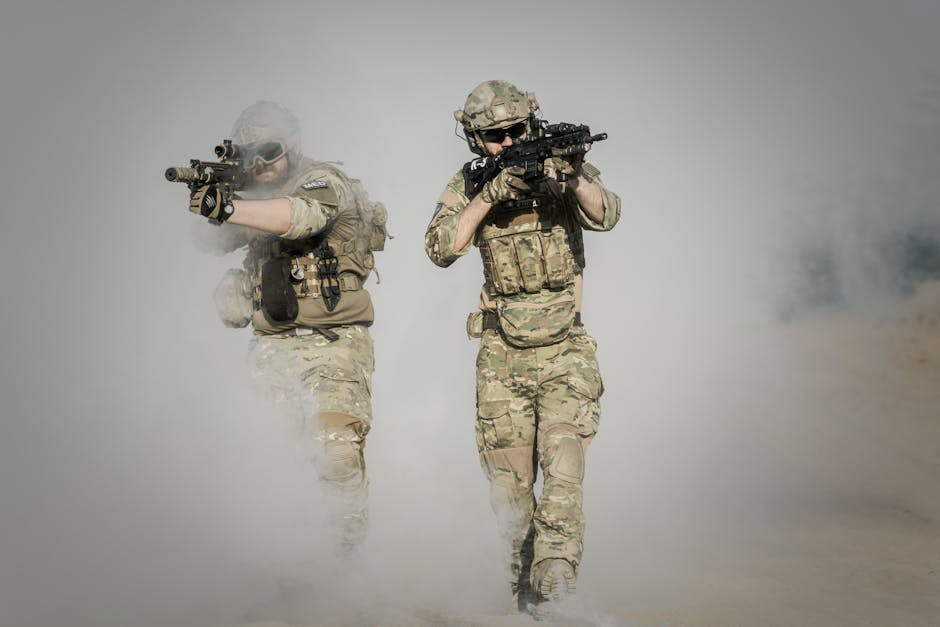
Legacy and Evolution of Two Giants
For over 20 years, Call of Duty and Battlefield have stood as twin titans in the first person shooter world. What started as gritty, World War era shooters grew into multi billion dollar franchises that shaped how FPS games are made, played, and marketed. From LAN parties to global esports tournaments, their influence isn’t just lasting it’s baked into the DNA of modern gaming.
Each franchise evolved with the times. Call of Duty moved quickly to annualized releases, refining close quarters combat with each iteration. It leaned into blockbuster campaigns, cinematic pacing, and, more recently, tethered itself to the endlessly adaptive Warzone experience. Battlefield, on the other hand, stuck with its identity: sprawling maps, destructible environments, and squad focused warfare. It’s adopted a slower, but more tech driven update cycle focusing on overhauls in engine tech, server structure, and sandbox systems.
The real divide today is in strategy: CoD relies on consistency yearly drops plus live seasons packed with cosmetic unlocks, while Battlefield pivots toward major, fewer updates that prioritize engine improvements and long term feature depth. One plays like a high speed treadmill; the other, a war simulator tuned by patches. Which approach wins out isn’t set in stone, but the contrast is sharper than ever in 2026.
Multiplayer Experience in 2026
Call of Duty still owns the quick reflex crowd. It’s sharp, immediate, built for players who want instant action, short matches, and no downtime. Movement is slick, gunfights are tighter than ever, and the arcade style pacing makes it perfect for players who want to jump in, rack up kills, and repeat. It’s refined chaos but it works.
Battlefield, on the other hand, continues to double down on scale. Massive maps, squad based tactics, and match dynamics that shift depending on vehicle control, weather systems, and objective coordination. It’s not just about twitch mechanics here it’s about planning and teamwork. If CoD is a knife fight in a phone booth, Battlefield is a full blown warzone.
Both franchises have rolled out new maps tailored to their style tight urban skirmishes for CoD, sprawling sandbox environments for Battlefield. Matchmaking has gotten smarter across the board thanks to machine learning models trimming queue times and balancing outcomes on the fly. Battlefield’s AI powered squad control adds another layer by giving solo players better coordination, while CoD leans into skill based matchmaking to keep each round challenging.
Cross platform is now baseline. Both franchises nailed it this time, offering synced progression, shared matchmaking pools, and platform parity at launch. And they’re pushing harder at community activation custom lobbies, creator tools, regular playlists curated by fans. Whether you’re console or PC, casual or competitive, you’re not on the outside looking in anymore.
In the end, it’s about choice. Fast and gritty? CoD’s your lane. Strategic and cinematic? Battlefield delivers. Either way, 2026 multiplayer doesn’t let you coast it pulls you in and makes you commit.
Visuals and Performance
Graphically, both franchises are flexing hard in 2026, but they’re taking very different roads. Battlefield continues to lean on the Frostbite Engine, and with good reason. The visual fidelity in Battlefield 2026 is brutal in the best way photorealistic lighting, hyper detailed textures, and a weather system that doesn’t just look good but actually changes how you play. The engine’s destructibility has also leveled up. Buildings crumble, terrain deforms, and nothing feels static. It’s not just scenery it’s a battleground that reacts.
Call of Duty, on the other hand, is laser focused on smoothness and cinematic control. Its proprietary engine delivers a hyper polished experience: crisp animations, fluid transitions, and nearly instant input feedback. While it doesn’t push raw realism like Frostbite, CoD’s strength lies in how it feels to play clean, immediate, and relentlessly refined. The motion blur, the lighting flares, the overall pacing of visuals it’s all designed to feel like you’re playing inside a blockbuster.
First look benchmarks offer a telling glance. On mid tier rigs (think GTX 3060 or equivalent), both titles run well but Battlefield demands more. 60 FPS is workable on high settings, but you can’t crank everything without dips. CoD, in contrast, maintains a smoother curve with faster load times and fewer hiccups, even when things go loud. If you care about tech headlines, Frostbite wins for ambition. If you just want to stay in the fight with zero friction, CoD takes the crown.
Single Player & Narrative Strength

Call of Duty 2026: Cinematic Warfare Returns
Call of Duty continues its legacy of blockbuster single player campaigns in 2026, delivering:
Global stakes that push players through intense, conflict driven missions
Cinematic presentation with high production value, motion captured acting, and dramatic cutscenes
Tighter pacing, favoring linear storytelling to maintain tension and momentum
The result is a cohesive, movie like experience that grabs attention right away and rarely lets go. Players are guided through carefully constructed set pieces that reward reaction time and emotional investment.
Battlefield 2026: A New Approach to Story
Rather than following the traditional campaign formula, Battlefield 2026 is experimenting with:
Fewer full length campaigns, focusing instead on narrative driven live events
Immersive storytelling moments embedded in multiplayer environments
Persistent world building, where story evolves week to week based on player decisions and global match results
This model sacrifices some cinematic polish but allows for deeper, ongoing engagement across the wider community.
Which Approach Sticks Emotionally?
Both strategies have strengths:
Call of Duty ensures a tight, emotional arc within a short span. Players finish a campaign feeling the impact of their role in a global conflict.
Battlefield, on the other hand, builds emotional tie ins over time through community driven narratives. There’s no definitive beginning or end just an evolving universe you’re a part of.
Whether you prefer a scripted blockbuster or an emergent war story depends on what kind of emotional payoff you’re looking for.
Want instant immersion and high drama? Go with Call of Duty.
Crave dynamic storytelling that unfolds with the player base? Battlefield offers new ways to stay hooked.
Community & Mod Support
In 2026, Battlefield has finally doubled down on what longtime fans have wanted: tools to build on the sandbox. The latest update brings deeper in game modding support and a more flexible editor, letting players create, share, and remix their own battle scenarios. It feels more like a platform than a product now and that’s a sharp pivot from its previous, more confined structure. Creative players can redesign maps, introduce custom rule sets, and push the engine in new directions. This isn’t lip service to the modding crowd it’s a real investment in community driven content.
On the other side, Call of Duty is sticking with what it does best: the polished, structured loop of Warzone and its seasonal battle pass model. No surprises just constant drops of weapons, cosmetics, and timed events that keep engagement steady. It’s fast, digestible, and still works for casual fireteam squads logging in on a Tuesday night. They’re building a lifestyle schedule, not a creative canvas.
The difference comes down to freedom vs frictionless addiction. Battlefield is empowering its player base to shape the experience, while CoD is refining the dopamine machine. If we’re talking about long term creative engagement and community growth, the edge in 2026 leans toward Battlefield. It gives the tools and lets its people run with them. CoD keeps players cycling through tight content loops, but leaves little room for innovation outside its roadmap.
Innovation Over Comfort
In 2026, it’s clear one franchise is stepping outside the comfort zone more aggressively than the other and that’s Battlefield. While Call of Duty continues to sharpen its core formula, tweaking visuals and refining movement, Battlefield is starting to feel experimental again. Destructible environments have gone from visual flair to strategic necessity. Walls come down, terrain shifts, and cover can vanish mid firefight. It’s not just chaos for the sake of chaos it’s meaningful interaction with the map.
Enemy AI, especially in co op and large scale modes, is smarter and less predictable. Battlefield bots don’t just run into your sights; they flank, suppress, coordinate. In contrast, CoD’s AI still leans more on scripting than improvisation. Meanwhile, recoil physics are treated less like background math and more like a skill mechanic. Guns feel heavier, kick harder, and demand muscle memory particularly in Battlefield’s new Hardcore Realism mode.
Call of Duty deserves credit for polish. Its pacing, visuals, and Warzone tie ins are unmatched for sheer spectacle. But in terms of innovation, Battlefield is the one trying to pull the genre forward.
Other genres should take note. Strategy games could reintroduce environmental reactivity. RPGs might benefit from less binary AI behavior. And across the board, shooters should reconsider what “realism” can mean less about graphics, more about player decisions affecting outcomes.
If you’re wondering how innovation plays out in other corners of gaming, this piece on How Baldur’s Gate 3 Redefined Role Playing in Modern Gaming is worth your time.
Final Score: Which Stands Taller in 2026?
After two decades of trading blows, Call of Duty and Battlefield remain the key players in the FPS arms race. But in 2026, the tide’s turned a bit and not just because of brand loyalty. Let’s break down the numbers.
Gameplay wise, Call of Duty holds its edge in tight, responsive gunfights what most players still crave in minute to minute action. Movement is cleaner, loadouts more customizable, and the feedback loop is fast. But Battlefield’s large scale warfare and dynamic maps give it a scale that CoD can’t touch. If you want full immersion and squad level tactics, Battlefield wins the long game.
Graphics are less subjective. You can’t ignore what DICE continues to do with the Frostbite Engine. Battlefield 2026 is visually stunning from terrain textures to lighting fidelity. But Call of Duty swings back with a different priority: performance. Even on mid spec hardware, it runs smoother under pressure with better optimization across consoles and PCs. So: realism vs fluidity that choice still comes down to personal taste and system capability.
Longevity? Battlefield’s sandbox tools and mod support put it ahead in community driven content. Meanwhile, Call of Duty’s Warzone tie ins and seasonal rotation keep players hooked, but on rails. One is a theme park. The other is open world.
In pure value terms time, money, replayability Battlefield gets the nod in 2026. You buy once, and you’re in for years with player generated content, free feature updates, and a more persistent ecosystem. Call of Duty continues to deliver cinematic highs and esports polish, but it also leans heavily on paid battle passes, skins, and time limited unlocks.
Verdict: If you’re in it for fast thrills and polish, stick with Call of Duty. But if you’re playing the long game community creativity, raw scale, and future proofing with open tools Battlefield is your best bet in 2026.
 Ask Sandyanna Whitest how they got into in-depth game reviews and you'll probably get a longer answer than you expected. The short version: Sandyanna started doing it, got genuinely hooked, and at some point realized they had accumulated enough hard-won knowledge that it would be a waste not to share it. So they started writing.
What makes Sandyanna worth reading is that they skips the obvious stuff. Nobody needs another surface-level take on In-Depth Game Reviews, Game Release Announcements, Player Strategy Guides. What readers actually want is the nuance — the part that only becomes clear after you've made a few mistakes and figured out why. That's the territory Sandyanna operates in. The writing is direct, occasionally blunt, and always built around what's actually true rather than what sounds good in an article. They has little patience for filler, which means they's pieces tend to be denser with real information than the average post on the same subject.
Sandyanna doesn't write to impress anyone. They writes because they has things to say that they genuinely thinks people should hear. That motivation — basic as it sounds — produces something noticeably different from content written for clicks or word count. Readers pick up on it. The comments on Sandyanna's work tend to reflect that.
Ask Sandyanna Whitest how they got into in-depth game reviews and you'll probably get a longer answer than you expected. The short version: Sandyanna started doing it, got genuinely hooked, and at some point realized they had accumulated enough hard-won knowledge that it would be a waste not to share it. So they started writing.
What makes Sandyanna worth reading is that they skips the obvious stuff. Nobody needs another surface-level take on In-Depth Game Reviews, Game Release Announcements, Player Strategy Guides. What readers actually want is the nuance — the part that only becomes clear after you've made a few mistakes and figured out why. That's the territory Sandyanna operates in. The writing is direct, occasionally blunt, and always built around what's actually true rather than what sounds good in an article. They has little patience for filler, which means they's pieces tend to be denser with real information than the average post on the same subject.
Sandyanna doesn't write to impress anyone. They writes because they has things to say that they genuinely thinks people should hear. That motivation — basic as it sounds — produces something noticeably different from content written for clicks or word count. Readers pick up on it. The comments on Sandyanna's work tend to reflect that.