
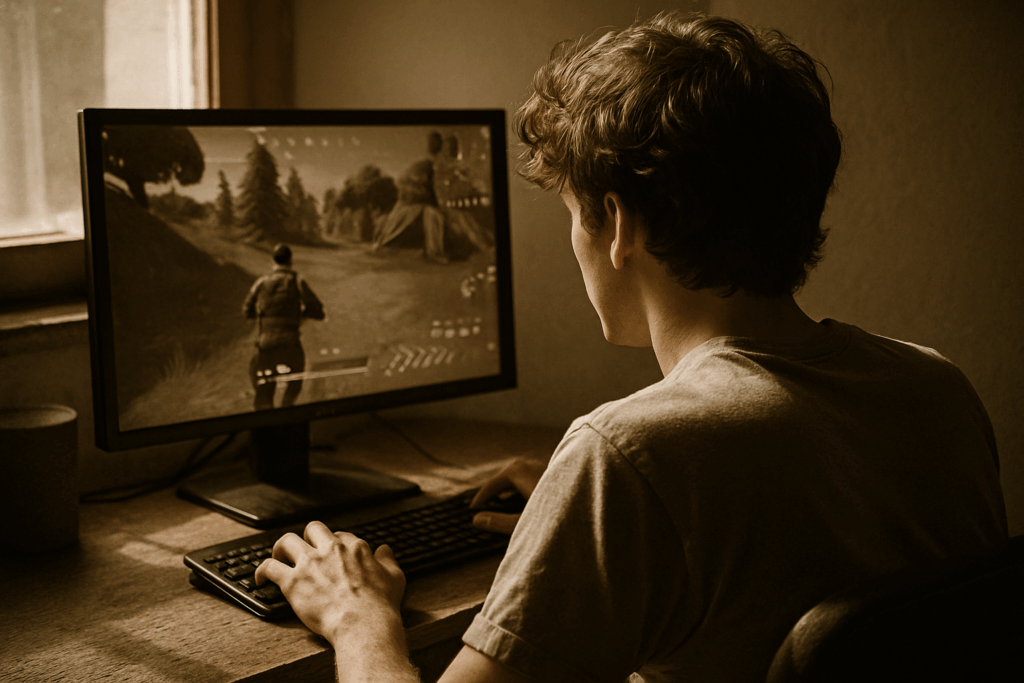
Why Movement Is Your Real Weapon
Elite Fortnite players win more than just aim duels they dominate because of how they move. In high tier lobbies, split second dodges, efficient rotations, and vertical mastery often determine the winner long before the final shot is fired.
Beyond Aim: Why Movement Matters
While aim is still important, movement is the unsung hero behind most clutch moments.
Better movement = better positioning: You control the angles. You choose when to fight.
Unpredictability wins fights: Clean footwork throws off even the best aimers.
Micro movements influence macro outcomes: One smart strafe can win a 1v1; one smart rotate can win the game.
Positioning: The Invisible Advantage
Strong movement isn’t just about mechanics. It’s about where you are before the battle starts.
Rotation routes: Knowing which hills, valleys, or rooftops to take keeps you safe and increases your options.
Survivability: Smart early game movement keeps you alive into late game circles.
Fight control: High ground and terrain give you leverage without burning mats.
Movement in the 2026 Meta
The Fortnite meta continues to reward players who master both verticality and speed. Here’s what you need to consider this year:
Key Meta Trends:
Mobility Items Dominate: Grapple Gloves, Kinetic Blades, and Rift Gates are in if your inventory doesn’t support movement, you’re behind.
Map Flow Favors Height: New zones and POIs are built with vertical control in mind.
Drop Spots with Rotation Options: Landing areas with natural zip lines, geysers, or vehicles give early game flexibility.
Pro Tip:
Don’t just grab the nearest launch pad plan your movement 2 3 zones ahead. Smart movement isn’t reactive it’s predictive.
Stay sharp, stay moving, and remember: out rotating is often more valuable than out gunning.
Core Movement Techniques You Need to Know
Movement wins fights before bullets fly. Here’s the breakdown on three techniques that separate average players from apex predators:
Slide Canceling: When to Use It and When It’s Overkill
Slide canceling is all about breaking animations for tighter control and quicker follow ups. Use it to out position enemies or peek with speed during reloads or edits. But don’t spam it. Overusing slide cancels exposes your rhythm and tanks your aim alignment. Instead, treat it like a directional burst confusing enemies, resetting momentum, and diving into builds when it counts.
Mantling and Sprint Stacking: Build Momentum Without Losing Visuals
Sprint stacking is the unsung movement buffer delaying your sprint’s cooldown by combining taps and directional jumps. Mantle right after a sprint stack and you can vault surfaces with minimal camera bounce. This keeps your visual lock while moving vertically. Perfect for rapid pushes or storm skirmishes where vision and flow matter more than height.
Build Peek Mobility: Edits + Movement = Chaos for the Enemy
Mobility isn’t just about raw speed it’s about where you are when the enemy expects you somewhere else. Build peek movement is fast, lateral edits combined with crouch slides or corner bounces that throw off aim tracking. Practice stair resets with a quick shoulder fake or window edits paired with rolls left right. Don’t be predictable. If they can’t target you, they can’t win.
Master these three, and every box fight becomes easier not because your shots hit harder, but because you’re simply never where they think you’ll be.
High Level Rotation Strategies
Elite level rotation isn’t just about getting from Point A to Point B it’s about arriving ahead of the fight, choosing smarter angles, and avoiding unnecessary risks. Mastering advanced rotation tactics is what separates reactive players from proactive game changers.
Pre Rotate vs. Reactive Movement: What You Need to Know
Your rotation timing can win or lose you the match. Understanding when to move early versus responding to the zone is a key skill.
Pre Rotation Strategy:
Move before the circle closes to claim power positions.
Reduce the risk of ambushes by controlling high ground or natural cover.
Gives time to reset, heal, and prepare for endgame.
Reactive Movement Strategy:
Useful for baiting aggressive players into early fights elsewhere.
Requires good game sense to avoid getting caught in rotations.
Riskier trade off, but can provide surprising backdoor entry into zone.
Pro Insight: Advanced players often pre rotate on zones 2 and 4, but stay reactive on zones 1 and 3 to gather materials or scout pathing.
How Terrain and POI Layouts Keep You Alive
Familiarity with the map’s elevation and Points of Interest (POIs) gives you a positional edge. It’s not just about direction it’s about minimizing exposure.
Use elevation intelligently:
Hills, cliffs, and rooftops give high ground control.
Natural drops can offer safe passage or ambush exits.
Rotate along the edge of POIs:
Avoid traveling through the heart of hot zones.
Stick to outer buildings and fences for cover.
Choke Points to Avoid:
Narrow passes where third party ambushes are common.
Bridges and canyons that limit escape options.
Chapter 5 Meta: Mobility Items Ranked
Not all movement items are created equal. The Chapter 5 meta favors speed, vertical utility, and reliability over flashy gimmicks.
Top Tier Mobility Items:
Kinetic Blade: Quick slashes with vertical lift and decent cooldown.
Reboot Rift: Instant repositioning paired with outplay potential.
Shockwave Grenade: High escape value and surprise rotation angles.
Mid Tier:
Launch Pads: Still useful, but highly contested.
Grapple Gloves: Great for solo plays; requires skill and timing.
Low Tier (Situational):
Hop Floppers: Better for sneaky solos; weak in squads.
Vehicles: Loud, clunky, and often attract third parties.
Skip or Use with Caution:
Impulse Grenades: Too imprecise without strong aim control.
Zipzones (Map Based): Limited usefulness if outside rotation path.
Key Tip: Carry at least one reliable movement item two if you’re fragging or IGLing (in game leading).
Rotation wins games. Build smarter paths, know your timing, and always stay one move ahead of the lobby.
Out Playing Opponents with Movement

Sound is a weapon. Baiting movement audio simple sprints, mantles, or edit resets can mislead opponents into overcommitting or revealing their position. A good fake out forces pre fires, early peaks, or awkward rotates. Think of it like a game of chess where you make noise instead of moving a piece. Subtle crouch walks followed by sudden dashes sell the illusion. Set the trap, then punish the reaction.
Jump fatigue is another overlooked tactic. Players who panic chase with continuous jumps run out of vertical options fast. Force them into that error. Create just enough vertical space in your builds to make them climb aggressively, then hit back when their movement becomes slow and predictable. Smart play doesn’t just play the fight it sets up the mistake before it happens.
And finally, the art of slipping through builds without getting boxed. This is less about raw speed and more about direction shifts, awareness, and staying one edit ahead. The key here is to avoid funneling into standard routes your opponent can close off. Look for off angles, floor resets, partial edits micro decisions that keep your movement fluid and unpredictable. Box awareness isn’t a reaction skill, it’s preemptive. Master that, and you won’t just evade traps you’ll flip the script.
Team Movement in Trios and Squads
Smooth movement as a unit separates good squads from great ones. In high stakes lobbies, it’s not just individual skill it’s coordination that wins fights. Here’s how teams can move as one without falling apart.
Movement Synergy: Stick Together, Win More
When each player runs off in a different direction, your team loses pressure and increases the risk of being singled out. Tight team movement keeps firepower concentrated and reduces third party vulnerability.
Pre plan rotations: Call your path early to avoid unnecessary detours
Use pings and markers smartly: Clarify jump spots, cover, or storm holds
Avoid tunnel vision: Stay aware of where teammates are repositioning
Real Time Communication: Make Every Flank Count
Calling flanks and bait plays mid fight is an art. Aimless flanking often turns into isolated deaths. To pull it off:
Announce flank timing clearly use short, direct callouts like “Going left in 3”
Confirm support only flank if someone draws attention or provides cover
Keep eyes on the trap one teammate should be watching for counter flanks while others move
Who Carries Mobility and Why it Matters
Mobility distribution can decide who clutches and who gets stuck.
Designate the IGL or support role to carry team mobility they control the flow of movement
Backup players can carry solo escape tools impulse grenades, launch pads, etc.
Think in pairs: Pairing mobility items (e.g. Shockwave + Grapple Blade) on two players helps in split recovery or flank and finish plays
Smart mobility allocation lets your team take fights on your terms and disengage when needed. It’s not about everyone having movement it’s about the right players having it at the right time.
Efficient Movement = Efficient Looting
Speed isn’t just for surviving fights it’s crucial for stacking materials fast. Players who rotate early and tight don’t waste time clearing empty structures or wandering low yield paths. By the time you’re dragging behind the third storm circle with 200 wood and dreams, the quicker player is maxed out and ready for late game builds.
Smart players don’t just rotate they path with purpose. Hit known resource heavy zones early, then shift routes based on zone pulls. Think dense trees, stone clusters, or half looted towns near rotation lines. It’s not random; it’s a loot plan with a movement backbone.
The same mindset that makes a farming sim efficient applies here: move smart, clear properly, know what’s worth taking. Want a different angle on this kind of optimization mentality? Check out this crossover in workflow thinking: Complete Beginner’s Guide to Efficient Farming in Stardew Valley.
Final Edge Tips Most Pros Won’t Share
There’s movement, and then there’s mind game movement. Knowing how to manipulate vertical audio is one of the quietest ways to take control of a fight. Build up, toss a fake mantle or stair edit, and pause make it sound like you’re rotating when you aren’t. Competent players chase sound cues; use that against them.
Next level? Track reloads or catch build delays. When someone dumps the last shell from a shotgun or resets a wall late, that’s your opening. Don’t just push move with intention. A basic rule: if they’ve stopped building or firing, it means they’re either thinking or stalling. That’s when they’re most breakable.
As for drills: stop wasting time in maps that don’t mimic real lobbies. Use creatives with unpredictable spawns, tight edits, and real audio reactivity. Practice exits while switching elevations, rehearse pushing bubble builds, and test tracking crosshair placement mid air. You don’t need ten hours a day. Just reps that look like reality.
If you’re smoother, sharper, and harder to catch, half the fight is already won.
Stay quick. Stay unpredictable. Out move them every time.
 There is a specific skill involved in explaining something clearly — one that is completely separate from actually knowing the subject. Peterson Larsonicks has both. They has spent years working with gaming news and updates in a hands-on capacity, and an equal amount of time figuring out how to translate that experience into writing that people with different backgrounds can actually absorb and use.
Peterson tends to approach complex subjects — Gaming News and Updates, Player Strategy Guides, Expert Opinions being good examples — by starting with what the reader already knows, then building outward from there rather than dropping them in the deep end. It sounds like a small thing. In practice it makes a significant difference in whether someone finishes the article or abandons it halfway through. They is also good at knowing when to stop — a surprisingly underrated skill. Some writers bury useful information under so many caveats and qualifications that the point disappears. Peterson knows where the point is and gets there without too many detours.
The practical effect of all this is that people who read Peterson's work tend to come away actually capable of doing something with it. Not just vaguely informed — actually capable. For a writer working in gaming news and updates, that is probably the best possible outcome, and it's the standard Peterson holds they's own work to.
There is a specific skill involved in explaining something clearly — one that is completely separate from actually knowing the subject. Peterson Larsonicks has both. They has spent years working with gaming news and updates in a hands-on capacity, and an equal amount of time figuring out how to translate that experience into writing that people with different backgrounds can actually absorb and use.
Peterson tends to approach complex subjects — Gaming News and Updates, Player Strategy Guides, Expert Opinions being good examples — by starting with what the reader already knows, then building outward from there rather than dropping them in the deep end. It sounds like a small thing. In practice it makes a significant difference in whether someone finishes the article or abandons it halfway through. They is also good at knowing when to stop — a surprisingly underrated skill. Some writers bury useful information under so many caveats and qualifications that the point disappears. Peterson knows where the point is and gets there without too many detours.
The practical effect of all this is that people who read Peterson's work tend to come away actually capable of doing something with it. Not just vaguely informed — actually capable. For a writer working in gaming news and updates, that is probably the best possible outcome, and it's the standard Peterson holds they's own work to.